
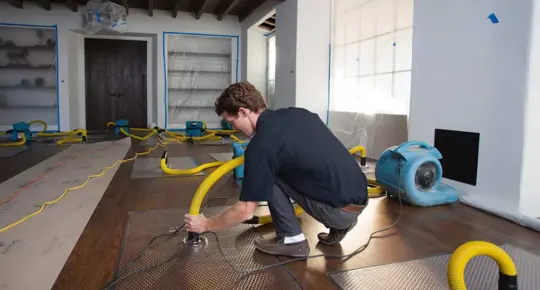
Not all flood damage is addressed promptly. Properties that flooded during a storm and were not properly restored, homes with slow plumbing leaks that went undetected for months, and buildings that suffered repeated water intrusion events all share a common challenge: the damage is no longer acute. It has become chronic.
Long-term flood damage requires a different approach than emergency restoration, and understanding what has happened to the structure over time is essential before any repairs begin.
What Long-Term Flood Damage Looks Like
When moisture has been present in a structure for an extended period, the signs extend well beyond water stains. You may see:
- Efflorescence (white mineral deposits) on concrete or masonry walls
- Widespread mold growth on multiple surfaces and inside wall cavities
- Structural wood that has begun to rot or shows visible deterioration
- Persistent odors that do not respond to surface cleaning
- Foundation or slab issues related to sustained moisture beneath the structure
- Ongoing pest activity, as moisture attracts insects and rodents
These are not cosmetic problems. They indicate that the building materials themselves have been compromised and that the structure's integrity may be affected.
Mold Remediation Is Not Optional
Long-term moisture exposure almost universally results in mold growth somewhere in the structure. In many cases, visible mold is only a fraction of what is present -- mold inside wall cavities, under flooring, and in HVAC systems is common in properties with extended water damage.
Mold remediation must be completed before restoration work begins. Attempting to rebuild over active mold growth creates an ongoing air quality problem and typically results in mold returning within months. Our team provides full mold remediation services as part of the restoration process. See our <mold remediation> page for more detail.
Structural Assessment Comes First
Before any rebuild work begins on a property with long-term flood damage, a full structural assessment is necessary. This identifies which materials can be dried, treated, and retained versus which must be removed and replaced. In cases of advanced rot or structural compromise, engineering consultation may be required.
This assessment also establishes a baseline for moisture levels throughout the structure. All materials must return to acceptable moisture content before new materials are installed -- otherwise, moisture trapped behind new drywall or under new flooring will cause the same problems again.
Air Quality and HVAC Considerations
HVAC systems in properties with long-term moisture damage are often affected. Ductwork can harbor mold spores and distribute them throughout the structure when the system runs. A property that smells fine when the air conditioning is off may have a significant odor problem when it turns on.
HVAC duct cleaning and, in some cases, system replacement, is part of comprehensive long-term flood damage restoration. This is not a detail to skip -- restored air quality is part of what makes a home livable and protects the health of occupants.
Working with Insurance on Long-Term Claims
Insurance claims for long-term flood damage can be complex. Policies differ on coverage for damage that was not immediately reported, and claims related to repeated events or gradual damage have specific requirements. Documentation is critical -- the scope of damage, moisture readings, and evidence of the timeline all affect how a claim is evaluated.
Our team provides detailed documentation throughout the restoration process and has experience working with insurance carriers on complex claims in the Port St. Lucie and Treasure Coast market.
The Path to Full Restoration
Long-term flood damage is not a quick fix. A proper restoration typically involves multiple phases spread over several weeks: assessment and documentation, demolition and removal of compromised materials, mold remediation, structural drying, rebuild, and final quality checks on moisture levels and air quality.
The goal is not just a property that looks restored -- it is one that tests restored, with moisture readings and air quality confirming that the underlying problems have been fully resolved.