
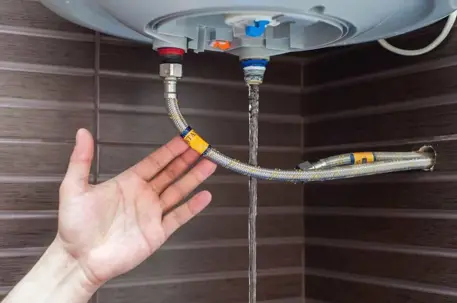
Water heaters are among the most common sources of residential water damage. They sit in a utility closet or garage, out of the way, and are easy to ignore until something goes wrong. The problem is that by the time a water heater leak becomes obvious, it has often already caused damage to the surrounding floor, walls, and structure.
Knowing the early warning signs can mean the difference between a simple repair and a full water damage restoration job.
Puddles or Moisture Around the Base
This is the most obvious sign, but it is often dismissed as condensation. While some condensation is normal in humid Florida conditions, standing water or a consistently wet floor around the base of a water heater is not. Any visible pooling warrants an immediate inspection of the tank, connections, and drain valve.
Rust-Colored or Discolored Water
Rusty or brownish water from hot water taps indicates corrosion inside the tank. This happens when the anode rod -- the sacrificial metal rod designed to prevent tank corrosion -- has worn out. Once corrosion begins inside the tank, a leak or full tank failure is not far behind.
If cold water is also discolored, the issue may be in the supply lines rather than the heater itself, but either way, it needs to be investigated.
Popping, Rumbling, or Banging Sounds
Sediment builds up at the bottom of water heater tanks over time, especially in areas with hard water. As the heater cycles on, water trapped beneath the sediment layer heats up and creates popping or rumbling sounds. This is not just an annoyance -- it reduces efficiency, stresses the tank, and accelerates wear that leads to leaks.
Inconsistent Hot Water
A water heater that used to provide consistent hot water but now runs out quickly or delivers water that fluctuates between hot and lukewarm may be failing. This can indicate a malfunctioning heating element, a failing thermostat, or sediment buildup -- all signs of an aging or compromised tank.
Age of the Unit
Most residential water heaters have a lifespan of 8 to 12 years. If your unit is approaching or past that range, the risk of a leak increases significantly. An older unit that shows any other warning signs should be treated as a leak risk until inspected, not a question of if but when.
Check the serial number on the label -- most manufacturers encode the production date in the first few characters. Your plumber or the manufacturer's website can help you decode it.
Dampness in Nearby Walls or Flooring
Water heater leaks do not always pool visibly. Slow seepage can travel along the floor into adjacent walls or saturate the subfloor beneath the unit without forming a visible puddle. If you notice soft flooring, musty odors, or discoloration near the water heater closet, moisture mapping is the right next step.
We cover the full restoration process for this type of damage on our <water heater leak water damage restoration> page.
What to Do If You Suspect a Leak
Turn off the water supply to the heater and the power or gas supply if it is safe to do so. Then call a plumber to assess the unit and a water damage restoration company to assess any structural or flooring damage.
Acting quickly limits how far moisture spreads. Water heater leaks caught early often involve only the immediate area. Leaks that go unnoticed for days can saturate walls, rot framing, and create conditions for mold growth throughout the utility space and adjacent rooms.